Older californians nutrition program title banner

Success Stories 2026

Spectrum Community Services (San Leandro Senior Center) – PSA 9

The Meal That Opened the Door

At 79, Brenda Scott lost her eyesight almost overnight. Known for her vibrant spirit and love of walking, she suddenly faced a world that felt uncertain and unsafe during a global crisis. "I love to walk, but after losing my eyesight, safety became a big concern for me," Brenda recalls. "I was scared that people would see my glasses and cane and think I was an easy target for crime." Brenda was not initially searching for a program — she was searching for stability. She found it through the Older Americans Act congregate nutrition program at Spectrum Community Services. What began as a place to share a meal became the doorway to rebuilding confidence, connection, and independence.

Brenda Scott
Brenda Scott

At lunch, routine replaced uncertainty. The same welcoming voices greeted her at each visit. People at her table gently guided her to her seat, helped orient her tray, and described what was on her plate so she could make choices independently. Over time, these small acts created trust and belonging. The meal site became a daily anchor — a place where she was expected and supported. "The programs at Spectrum have been a lifeline for me," Brenda says. "I have my ‘villages’ — my ‘Walk with Ease’ village and my ‘Senior Meals’ village. Everyone looks out for me. I am so blessed." Because the walking program takes place immediately after lunch, the nutrition site naturally connected Brenda to additional wellness opportunities. After eating with friends, she joins the ‘Walk with Ease’ class held in the same building. The familiarity of the space allows her to participate comfortably and safely.

Through meals, movement, and friendship, Brenda rebuilt confidence in herself and her surroundings. The nutrition program provided more than nourishment; it created a reliable touchpoint where staff and peers could notice needs and connect her to supportive services before isolation took hold.

Her experience reflects a broader truth about congregate nutrition programs: they are often the entry point to healthy aging. A shared meal creates structure, reduces loneliness, and opens the door to physical activity, safety, and community engagement.

What began as a search for safety became a network of care. The people at Brenda’s table remain her daily support system, proving that the most important ingredient served at a meal site is connection.

Vietnamese American Community Center of the East Bay (VACCEB) – PSA 9

VACCEB’s Older Californians Nutrition Program (OCNP) provides culturally responsive meals and enrichment activities that support the health, dignity, and social well-being of low-income seniors in the East Bay.

The video below features older adults sharing why they come to VACCEB and how the OCNP program supports them. They speak about the importance of receiving nutritious meals, participating in activities such as art and wellness classes, and building meaningful social connections.

Through OCNP funding and Nutrition Modernization efforts, VACCEB has strengthened food access while creating a welcoming community space that reduces isolation and promotes overall well-being. These stories reflect how VACCEB’s OCNP program continues "Serving Up Solutions" by meeting older adults where they are and responding to their evolving needs.

Human Services Association – PSA 19

Long Beach Senior Center

Michael Bos
Michael Bos

I have many fine memories made at the Long Beach Senior Center (LBSC). Over several years I have befriended many people here and have been a beneficiary of many LBSC programs and activities. The Human Services Association (HSA) nutrition program helps me and many other seniors who get by on tight monthly budgets enjoy healthy lunches on weekdays. The suggested donation amount makes eating healthy feel affordable. I am one of numerous individuals who chip in as a volunteer – we help serve hot meals and then do cleaning. Our onsite HSA representative is consistently cheerful and conscientious. Her oversight and hard work ensure that the HSA lunch program runs well. Many times, while eating with fellow seniors, we reflect on the important roles LBSC and HSA have in our lives. Most of us definitely eat healthier thanks to HSA (and the government programs behind it) than we would as low-income seniors living alone in our respective apartments. And gathering together each midday helps us maintain healthy social networks as well. The LBSC brings together people of diverse backgrounds and I enjoy friendships and conversations across various languages – English and Spanish and American Sign Language (ASL). I also love the welcoming, positive vibes. For all of the above I am grateful.

Michael Bos


Willy Remata
Willy Remata

Houghton Park

I came here in June 2024; I was sad because I had just attended my mother’s funeral and then I lost one of my best friends, my dog Paysley. When I started to come to the Houghton site, I met nice people who made me feel better. Now I am happy to be part of this group. The food is healthy; I love vegetables— they’re good for my diet. The variety of food is important for my health.

Willy Remata


Hawaiian Gardens Senior Center

Teresa Cervantes
Teresa Cervantes

Teresa Cervantes is a 66-year-old widow who has faced many challenges in maintaining a healthy lifestyle. After the passing of her husband, Teresa struggled with grief, depression, and managing her health. Teresa suffers from diabetes and high blood pressure, which require careful attention to diet, but living alone made daily tasks such as preparing nutritious meals more difficult.

Teresa’s eating habits became inconsistent and unhealthy. She often skipped breakfast, while other times she relied on processed or fast foods. She knew these choices were not good for her health, yet she often felt too tired, unmotivated, or overwhelmed to cook meals. As a result, her blood sugar and blood pressure levels were difficult to control, and her overall energy levels declined. In addition to her physical health struggles, Teresa also experienced emotional challenges. After losing her husband, she felt isolated and depressed. Without regular social interaction, her days became lonely, which further affected her motivation and well-being.

Everything began to change when a friend recommended the HSA senior nutrition program at the Mary Rodriguez Senior Center in Hawaiian Gardens. Encouraged by her friend, Teresa decided to attend, unsure of what to expect. Soon, she discovered that the program offered much more than just meals. By attending three to five days a week, Teresa now receives hot, nutritious meals that meet the recommended dietary guidelines for older adults. These meals are carefully prepared to support individuals managing conditions like diabetes and high blood pressure, helping them maintain better control over their health.

Beyond the nutritional benefits, the program has provided Teresa with a sense of belonging and community. She has formed new friendships and enjoys socializing with others who share similar life experiences. Mealtime has become something she looks forward to, not only for the healthy food but also for the laughter, conversation, and emotional support she receives from fellow participants. This welcoming environment has helped lift her spirits and reduce feelings of loneliness and depression.

Today, Teresa feels healthier, happier, and more connected than she did before joining the program. The HSA senior nutrition program has had a positive impact on both her physical and emotional well-being. Through nutritious meals and meaningful social interaction, Teresa has regained a sense of purpose, confidence, and joy in her daily life.

Teresa Cervantes

Sierra Senior Services – PSA 4

Sierra Seniors Services Logo

Sierra Senior Services shared these stories about the impact of the nutrition program on older adults in their community.


A new participant recently joined our nutrition program following shoulder surgery. Once independent and active in her community, she suddenly found herself unable to drive, shop for groceries, or comfortably prepare meals. What had once been routine daily tasks became painful and overwhelming.

During her first week of receiving home-delivered meals, she shared how much the support had already meant to her. Knowing that a nutritious meal would arrive each day allowed her to focus on resting and healing. The physical relief was significant, but so was the emotional reassurance.

In a conversation with one of our volunteers, she expressed deep gratitude for the meals. She quietly mentioned that she felt bad that she could not make a voluntary contribution at this time. Like many older adults living on fixed incomes, unexpected medical events can quickly create financial strain. Our volunteer gently reassured her that contributions are always optional and that the purpose of the program is to be there when support is needed, without pressure or obligation.

That moment reflects the heart of the Older Americans Act Nutrition Program. It is not simply about delivering food; it is about preserving dignity, reducing stress, and ensuring older adults feel valued and supported during vulnerable times. A warm meal delivered with kindness carries a powerful message: You matter, and your community cares.

For this participant, the meals provided nourishment, but they also restored a sense of stability during a challenging period. As she continues her recovery, she knows she is not alone.


When Walter joined our program in August 2024, he was in a very fragile place. Living alone, he struggled daily just to get out of bed. He often called us confused, disoriented, and clearly not feeling well. He would call regularly on the weekends saying he was hungry and did not know what to do, which made us realize we were his only reliable source of food. In response, we increased the number of meals delivered to better meet his needs.

Over time, with consistent nourishment and regular check-ins, we began to see meaningful changes. Today, his progress is clear. He has developed a daily routine, waking at the same time each morning. He no longer calls in a state of confusion. He sounds more alert, more grounded, and less weak. He is up, dressed, and ready for the volunteers to arrive.

Seeing where Walter is now, steadier, and more present, reminds us why this work matters. We are proud of his progress and honored to continue supporting him.

Ramona Senior Center – PSA 23

The Ramona Senior Center was nominated for the Ramona Non-Profit of the Year along with our Ramona Junior Fair and Ramona Kiwanis. The Senior Center won! We are so honored and grateful to be recognized for the work we do for our community. This is what our Chamber of Commerce said about us at the awards banquet:

(from left to right) Sara Allen (Board President), Lora Yule (Executive Director), Michelle Stanley and Debra Fraser (Board Members)

The Ramona Senior Center has been serving our community since 1974, and for more than fifty years, they’ve made sure our seniors are never forgotten. Each year, they serve over 80,000 meals through in-house dining and home delivery routes that stretch from Ramona to Santa Ysabel, Palomar, Pala, Ranchita, Valley Center, Warner Springs, and surrounding backcountry communities. No senior is ever turned away because they can’t afford to contribute.

Beyond meals, the Senior Center offers education, referrals, wellness information, social programs, and a welcoming place where seniors can gather, connect, and feel valued. Their work is powered entirely by volunteers — ages 18 to 90 — who bring compassion, consistency, and heart to everything they do. Even during the uncertainty of 2020, they found a way to keep meals coming and the doors open.

Operating on partial Older Americans Act reimbursement, with the rest sustained by grants, donations, and tireless fundraising like car shows and bingo nights, the Ramona Senior Center continues year after year because this community believes in it. For many homebound seniors, that friendly delivery driver may be the only human connection they have that week — and sometimes that presence becomes lifesaving.

Senior Center Executive Director Lora Yule won Citizen of the Year, and was thanked for her compassion, dedication, and going above and beyond because she genuinely loves the people she serves.

GLIDE Foundation – PSA 6

Curtis was 38 years old when he walked through the doors of GLIDE in 2005. Born and raised in San Francisco’s Fillmore neighborhood, he never imagined he would build a 20-year career in the Tenderloin. Back then, coming downtown felt taboo. "What we need to go down there for?" he remembers thinking. But when Reverend Cecil Williams came to him and said, "If you ever want to work for me, come down here," Curtis and others from his neighborhood decided to take a chance.

Curtis McGregor
Curtis McGregor

That decision changed his life.

Curtis started small, making sandwiches for three weeks. When a dishwasher position opened up, he stepped into it and stayed for eight months. Then another opportunity came—a stockroom driver role. He passed the test, got behind the wheel, and never looked back. From there, he moved into the main kitchen and completed the shift lead program. Today, he works in GLIDE’s Meals kitchen, part of the team that ensures thousands of people receive food with dignity every day.

"It’s been a wonder," Curtis says of his journey. Over the years, he’s seen people come and go. And in that time, he had the privilege of working closely with Reverend Cecil Williams—an experience he describes as life-changing. Cecil didn’t just give him a job; he showed him what leadership looked like. Hands-on, deeply committed, and loved by the community, Cecil inspired people to give and to serve. Watching that example helped Curtis grow—not just professionally, but personally.

"When I say I grew, I mean I enhanced my life," he explains. He had already begun turning things around, getting off public assistance and earning his own money. But at GLIDE, he found his niche.

Working at GLIDE keeps him grounded. Many of the people who come through the doors are folks he grew up with. Some have changed their lives. Some are still struggling. When he sees them, he remembers that he once stood in their shoes. "I didn’t have no clothes like them, I was dirty like them," he says plainly. "But I changed my life. And GLIDE helped make it happen."

His message is direct and heartfelt: "If I could do it, I know you can do it." He believes deeply in personal responsibility. Programs matter. Support matters. GLIDE offers access to agencies, services, and pathways forward. But, as Curtis puts it, real change begins within. "If you want to change your life, you can. It’s all about you."

He’s watched people in the worst shape turn things around—get jobs, secure housing, rebuild their lives. Sometimes the clearest sign of success is that they don’t come back. They’re not returning to the streets, not cycling through jail.

To Curtis, everyone deserves more than a second chance. "It takes some people four, five, six times to get it right," he says. "This is life. Ain’t nobody perfect."

Curtis’s own story is proof of that grace. In the Meals kitchen at GLIDE, he serves food—but he also serves hope.

Self-Help for the Elderly (Chi Sing Community Center) – PSA 6

I have been participating in the programs at Self-Help for the Elderly for more than ten years. At first, I was simply curious about what kind of organization it was. Over time, I gradually became part of this big family without even realizing it.

For me, the most important service the center provides is the daily lunch program. As a senior living alone, I used to eat irregularly at home. Sometimes I skipped meals, and I did not always know how to prepare balanced and nutritious food. Since I began coming to the center for lunch every weekday, my eating habits have become more regular and healthier. Having a warm, well-balanced meal each day has made a big difference in my life.
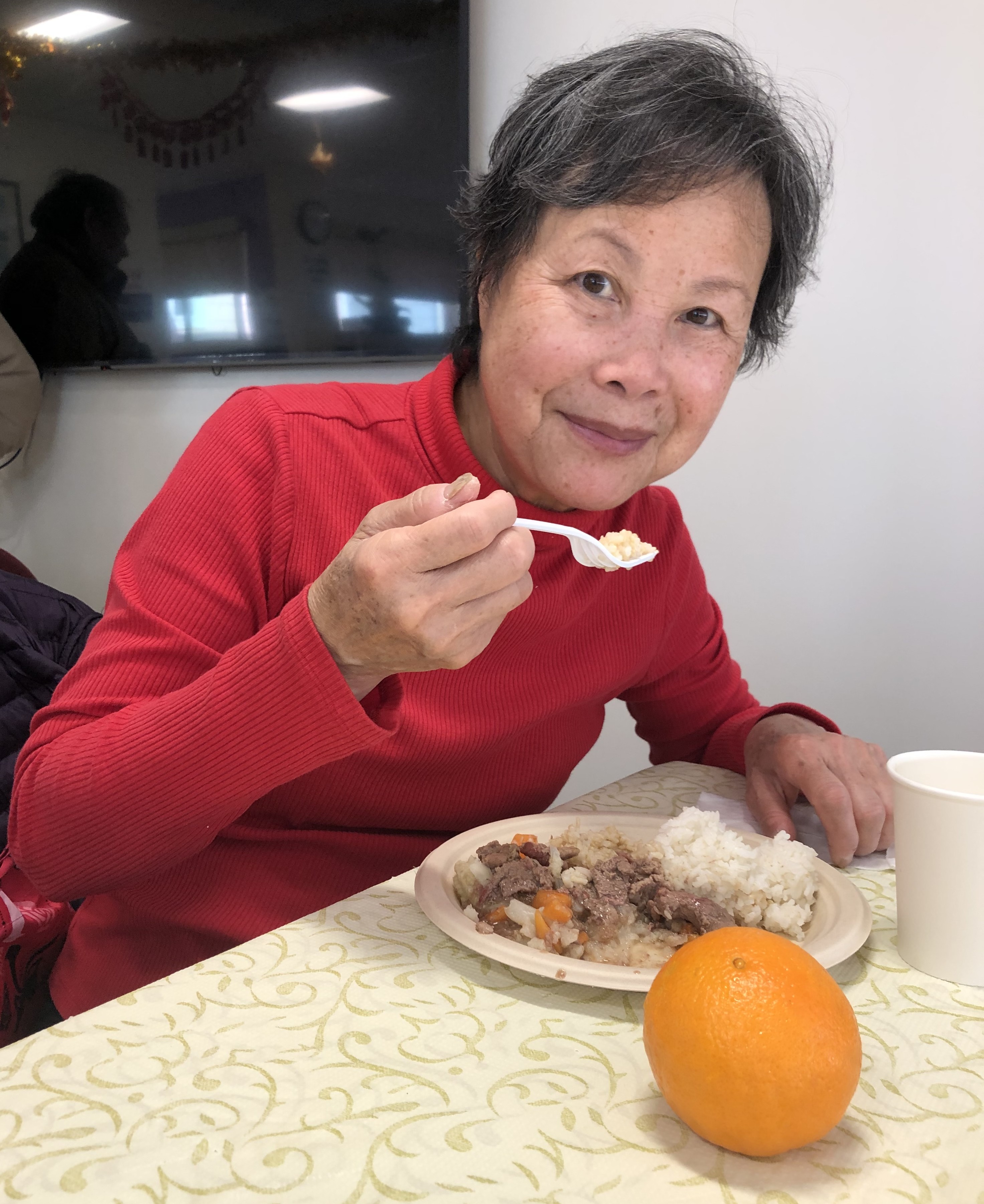
Christine Sun
Christine Sun

The lunch service is not just about food. It gives seniors like me a sense of stability and peace of mind. I no longer worry about what to cook or whether I am eating properly. Instead, I can enjoy a nutritious meal in a welcoming environment surrounded by friends. For someone who lives alone, this daily gathering brings comfort and connection.

After lunch, I often play mahjong with friends for recreation. It helps keep my mind sharp and my fingers active. On Tuesdays, I attend smartphone classes at the center. With technology becoming more advanced, it is important for me to learn how to use my phone, especially to stay in touch with my daughter.

The center also organizes local outings, museum visits, and shopping trips. Whenever I receive letters in English that I do not understand, staff members patiently explain them and help with forms and mailing. Their support has been truly helpful.

To me, Self-Help for the Elderly is more than just a community center. It is a place where seniors feel cared for and respected. The daily lunch service, in particular, has solved my most basic need and greatly improved my quality of life.

Christine Sun


How the Nutrition Program Helped Me Regain Control of My Health

Yuen Chang Pan
Yuen Chang Pan

I am a San Francisco resident in my seventies who was diagnosed with prediabetes. The meals provided by Self-Help for the Elderly, in partnership with the Older Americans Act Senior Nutrition Program, are vital to seniors like me.

For years, my doctor warned me that I needed to strictly manage my diet to prevent my blood sugar from worsening. However, living alone, I struggled to plan balanced meals or control portion sizes. I often felt uncertain about what to eat and how much to eat. Despite my efforts, my blood sugar levels showed little improvement.

Everything began to change when I started attending the daily lunch program at Self-Help for the Elderly. Having a consistent, well-balanced meal each day helped me establish a healthier routine. The meals are carefully designed to meet seniors’ nutritional needs. Each lunch includes appropriate portions of protein, fresh vegetables, and grains — with a choice of white or brown rice — along with milk and fruit. This thoughtful combination supports both overall health and blood sugar management.

Self-Help for the Elderly meal

One recent meal, for example, featured basil oyster-sauce baked beef with Chinese mustard greens. It was flavorful and well-prepared. Beyond taste, what truly matters is that these meals are nutritionally balanced and portion-controlled, making it easier for seniors like me to make healthier choices without confusion or stress.

At my most recent medical appointment, my doctor shared encouraging news: my blood sugar levels are now trending downward. Hearing this was incredibly uplifting. It reassured me that the daily nutrition support I receive is making a meaningful difference.

ONEgeneration (Wilkinson Senior Center) – PSA 25

The ONEgeneration Wilkinson Senior Center recently celebrated its annual Valentine’s Dance. Older adults enjoyed a delicious salmon dish, great music, and a live band hosted by the senior center. The energy in the room was wonderful, with older adults excited to dance, socialize, and connect with one another.

Jerutha Harvey smiling and holding a red teddy bear.
Jerutha Harvey

We were proud to provide 125 meals for this special event. It was also a beautiful intergenerational gathering, as many family members accompanied their loved ones to share in the celebration. Families enjoyed dancing together, listening to the band, and learning more about the programs and services we offer, while meeting other older adults in the community.

One of our regular participants, Jerutha Harvey, attends multiple classes and is an active member of our lunch program. She loves starting her mornings with stretching, joining classes, and socializing with friends. She shared that the center and dances are "great", she has met so many wonderful people, enjoyed delicious meals, and has even learned Spanish!

At ONEgeneration Wilkinson Senior Center, we are proud to celebrate our older adults and remain committed to creating meaningful experiences that foster connection, joy, and community.

Jewish Family Service LA (Jona Goldrich Multipurpose Center) – PSA 25

At the Jona Goldrich Multipurpose Center, the senior nutrition program is often a lifeline. It may be the only hot meal and social interaction many older adults receive that day. Beyond nutrition, the Center offers a welcoming space where participants are greeted by name, encouraged to connect, and reminded that they matter. As part of Jewish Family Service LA (JFSLA), the senior nutrition program is guided by long-standing values of community care and respect for older adults.

Robert, the mashgiach at the Jona Goldrich Multipurpose Center, overseeing Kosher meal preparation.

Meals are prepared in a neighboring production kitchen that follows Kosher dietary standards, including the extensive annual process required to make food Kosher for Passover. This process involves deep cleaning, special preparation, and even the use of a blow torch by the mashgiach, who ensures kosher dietary laws are followed. Throughout the year, JFSLA hosts large, joyful holiday celebrations such as Hanukkah, Christmas, Cesar Chavez Day, MLK Day, and Passover, creating moments of warmth, tradition, and togetherness.

While Jewish cultural roots are an important aspect, the program is fully inclusive, welcoming older adults from all backgrounds. In addition to daily nutritious meals, the site also offers transportation services, social work services, exercise classes, movies, and cultural celebrations. Through shared meals, supportive services, and meaningful programming, the senior nutrition program helps reduce social isolation and fosters a strong sense of belonging for the older adults served by JFSLA.

Mexican American Opportunity Foundation (Glassell Park Senior Center) – PSA 25

(from left to right) Norma Flores (Prop A Coordinator), Elizabeth Jimenez (Senior Programs Director), Mayra Gutierrez (Case Manager Supervisor)

The Mexican American Opportunity Foundation (MAOF) partnered with the City of Los Angeles Department of Recreation and Parks, Council District 1, and the Glassell Park Improvement Association to host a Senior Resource Fair on February 18. The fair connected older adults with local partners dedicated to helping them live their best, most independent lives. About 80 older adults attended to learn about the resources available to them. Each participant received lunch and a box full of vegetables and fruits. MAOF also provided assistive devices for older adults in need.

Valley InterCommunity Council (Sherman Oaks East Valley Adult Center) – PSA 25

Stephanie Galloway, CEO and President of VIC, at the
Stephanie Galloway, CEO and President of VIC, at the "Holi Celebration"

Valley InterCommunity Council's (VIC) Sherman Oaks East Valley Adult Center recently hosted its first "Holi Celebration," bringing together approximately 80 older adults, family members, and community participants for a joyful intergenerational gathering. Holi is a traditional Indian spring festival celebrating renewal, connection, and the triumph of light and goodness. Attendees enjoyed traditional sweets, vibrant art, music, and joyful activities that encouraged movement and cultural appreciation.

VIC was honored to be joined by six community sponsors and partners who funded the event and whose support uplifted the spirit of the celebration and furthered our mission by fostering socialization, cultural engagement, and wellness. The celebration concluded with an opportunity drawing and plenty of shared laughter. It was a truly joyful day that brought older adults and the community together in joy!

Santa Clarita Valley Committee on Aging – PSA 19

The Santa Clarita Senior Center at Bella Vida provides a wide range of supports and services in a welcoming and inclusive environment for older adults in the Santa Clarita community. The Center offers congregate and home-delivered meal services, information and assistance, wellness programs, caregiver resources, transportation services, recreation activities, exercise programs, and more. The congregate meal program is consistently well attended, serving over 250 older adults per day, and provides meaningful volunteer opportunities for older adults. Congregate meals are served restaurant‑style by volunteer "waitstaff," creating a warm and engaging dining experience.

Guests dining at the Santa Clarita Senior Center at Bella Vida

The Center hosts several annual special events, including an in-person Thanksgiving Day dinner and a Veterans Day meal and program honoring all veterans in attendance. Beyond its regular programming, the Center has a strong reputation for exceptional community partnership during emergencies. During the COVID‑19 pandemic, the Center introduced outdoor concerts in their parking lot to support social connection and community morale. These events became so popular that they continued after the Center reopened post‑pandemic.

And during the devastating January 2025 firestorms, Bella Vida staff deployed buses to an apartment building where many of their home-delivered meal clients live, to transport residents to a local Red Cross shelter. Staff also provided meals for older adults throughout their stay in the shelter.

San Gabriel Valley YWCA (Loma Alta Park Senior Center) – PSA 19

The Loma Alta Park Senior Center was established as a critical community hub for older adults in the Altadena area following the destruction of the Altadena Senior Center in the Eaton Fire of January 2025. The Altadena Senior Center provided essential services and programs, including the congregate meals program and a dedicated space for older adults and individuals with disabilities, that promoted the health and well‑being of older adults in the community.

Loma Alta Park Senior Center

A strong collaboration between the Los Angeles County Aging & Disabilities Department (PSA 19) and the Parks and Recreation Department resulted in the establishment of the Loma Alta Park Senior Center to provide a safe space and continue services previously available at the Altadena Senior Center, such as wellness classes, support workshops, and grab‑and‑go meals. These programs continue to play an important role in ensuring that older adults remain supported, connected, and engaged throughout the community’s recovery efforts.

ONEgeneration – PSA 19

From Recovery to Community: Manuel Arroyo’s Journey

In 2024, Manuel Arroyo began his journey with ONEgeneration through the Home-Delivered Meals (HDM) Program. At the time, he was placed on bed rest due to a serious infection that left him temporarily unable to walk. During this challenging period, proper nutrition and reliable support were essential to his recovery.

Manuel Arroyo
Manuel Arroyo

Manuel’s infection required him to remain on bed rest for two months. Unable to leave his home or prepare meals for himself, he faced the physical and emotional strain that often accompanies sudden health setbacks and isolation.

Through the HDM Program, Manuel received consistent, nutritious meals delivered directly to his home. The program ensured he maintained proper nutrition during his recovery while also providing reassurance that he was not alone during this difficult time.

After two months, Manuel’s infection cleared, and he was medically approved to resume normal activity. With encouragement and guidance from staff, he transitioned from the HDM Program to the congregate site at Las Palmas Park. This marked an important milestone in his recovery, allowing him to regain independence and re-engage socially.

Today, Manuel walks from his home to Las Palmas Park, a meaningful sign of how far he has come in his recovery. He enjoys sharing meals with friends at the congregate site and values the sense of community he has found. After the meal service concludes, he often heads to the billiards area, where he plays and spends time with friends. What began as essential support during a medical setback has grown into an active, social, and fulfilling daily routine.

Meals on Wheels of the Monterey Peninsula – PSA 32

MOWMP staff preparing meals for delivery to the dining sites

Los Abuelitos Senior Apartments is a standout group dining partner because of its resident-led, culturally relevant, and wellness-focused approach.

Meal participants at Los Abuelitos and the other eight community dining sites operated by Meals on Wheels of the Monterey Peninsula (MOWMP), enjoy healthy, high-quality meals supported by Older Americans Act nutrition funding.

Mark Hansen, Suzan Carabarin, and Ruth Rodriguez

Many residents at Los Abuelitos are retired farm workers who actively tend to a shared community garden, growing fruits, vegetables, herbs, and flowers they enjoy together. This hands-on involvement supports physical activity, healthy eating, mental well-being, and social connection, while honoring lifelong skills and cultural traditions. Together, these efforts combine public investment in older adult nutrition with strong participant engagement, turning group dining into a meaningful shared experience rooted in dignity, pride, and connection.

Meals on Wheels of the Salinas Valley (MOWSV) – PSA 32

A
A "Sidewalk Serenade" for a home-delivered meal client

MOWSV stands out for the services they provide due to a number of factors. Every staff member and volunteer has a sincere care for how older adults are treated, strives to treat each client with dignity and compassion, and continuously steps up to make a positive impact on clients.

MOWSV has greatly expanded its home-delivered meals program over the past few years. A highlight for clients is the award-winning monthly "Arts & About" program where a local musician accompanies volunteers on their meal delivery route and performs "sidewalk serenades" for clients at their homes.

Participants enjoying a Senior Social

In addition to providing services through the home-delivered meals program and two congregate meal sites, MOWSV also hosts monthly "Senior Socials" at seven sites in collaboration with local non-profits that provide valuable information to the older adults. The Senior Socials reach an additional 500 older adults every month.

To enhance service in the community, MOWSV also collaborates with many other community-based organizations such Food Bank for Monterey County, SPCA for our AniMeals pet food program, Teddy Bears with Heart, and Second Bloom.

University of the Pacific Program, Thomas J. Long School of Pharmacy – PSA 11

Ready for Intergenerational Multicultural Night

It’s not every day that strangers of all ages come together to share a sit-down meal, learn from each other, celebrate each other’s culture, and leave no longer strangers. This January, 77 older adults and 96 adults ranging from 18 to 91 years old from San Joaquin County participated in an Intergenerational Multicultural Night hosted by the University of the Pacific, Thomas J. Long School of Pharmacy and funded by Modernizing Older Californians Act – Nutrition. The event’s goals were to build understanding, respect, and acceptance; improve self-worth and self-esteem; and reduce social isolation.

At check-in, participants were assigned to a table to ensure various generations were represented. The room and tables were decorated with flags from around the world. The ambiance included music from the 40 countries that were represented that evening from Bangladesh to Zambia.

Student performance at the Intergenerational Multicultural Night

Conversations took place around the world map as people placed stickers to represent their heritage. At table P, conversations flowed naturally among the seven attendees. One participant wearing a beautiful Norwegian sweater, shared about Norwegian family hospitality. A conversation about Japanese kimonos inspired one adult to plan a visit to this year’s Obon Japanese Festival and Odori celebration to support the older adult who attends annually. An older adult learned from another older adult about Tai Chi at a community center and is glad she will already know someone on her first day. Two older adult retirees expressed they would like to contribute to their community, and an adult connected them with a volunteer opportunity.

Before and after enjoying a delicious and nutritious dinner, high school and university students performed Chinese, Filipino, Polynesian, and Vietnamese dances and songs. The night ended with a fashion show featuring older adults and adults modeling their country’s traditional clothes. It was a memorable night of connections, joy, celebration of cultures, and a delicious meal.

Humboldt Senior Resource Center (Mobile Café Program) – PSA 1

In rural Humboldt County, long distances, limited transportation, and geographic isolation create significant barriers for older adults seeking nutritious meals and social connection. The Humboldt Senior Resource Center’s (HSRC) Mobile Café Program addresses these challenges by bringing meals, community, and supportive services directly into rural and underserved areas.

Launa Salsberry delivering meals

The Mobile Café program delivers freshly prepared, nutritious meals to locations where traditional congregate dining sites are not accessible. By hosting consistent pop-up meal sites in community spaces such as grange halls and local centers, HSRC ensures older adults can participate without the burden of long or costly travel. These sites are intentionally welcoming, familiar, and easy to access, making participation possible for individuals who might otherwise go without regular meals.

The impact of the program extends well beyond nutrition. Many Mobile Café participants live alone and experience social isolation. The program creates regular opportunities for conversation, connection, and relationship-building. Participants frequently report that these gatherings improve their sense of well-being and provide an important routine and something to look forward to each week.

Mobile Café sites also function as critical access points to additional services. Staff and volunteers share information about nutrition programs, wellness activities, benefits counseling, and other aging services, helping rural residents remain informed and supported. For many participants, the Mobile Café is their primary connection to the broader aging services network.

Consistent attendance allows staff to build strong relationships with participants and notice changes in engagement or well-being. When someone stops attending unexpectedly, staff are often able to follow up and identify health concerns or unmet needs, allowing for timely support and referrals.

Demand for the Mobile Café program continues to grow as Humboldt County’s rural population ages.

The Mobile Café program reflects HSRC's commitment to meeting older adults where they are to reduce isolation, strengthen rural communities, and support older adults in aging with dignity, health, and connection.

Senior Coastsiders – PSA 8

Serving Up Solutions on the Coastside: How Senior Coastsiders Nourishes Health, Connection, and Independence

On the San Mateo County Coast—from Montara to Half Moon Bay—many older adults face barriers to maintaining good nutrition and staying socially connected. Limited transportation options, geographic isolation, and rising housing and living costs place older residents at higher risk of food insecurity and social isolation. At Senior Coastsiders, our Older Californians Nutrition Program (OCNP) is more than a meal service—it is a vital part of the community safety net that supports health, independence, and social connection for older adults living in this unique coastal region. Between July 2024 and June 2025, we prepared more than 66,000 meals from scratch in our commercial kitchen, which were either delivered to participants’ homes or served in our congregate dining room.

Rich (volunteer) and John (meal recipient)

Through our home-delivered and congregate meal programs, we provide consistent, nutritious meals to older adults who may otherwise struggle to access regular food and meaningful social interaction. For many participants, daily meal delivery is their only regular point of contact with the outside world. Our drivers and volunteers do more than deliver food—they check in, notice changes in health, mobility, or living conditions, and alert our care management team when additional support may be needed. This coordinated, relationship-based approach supports aging in place and helps prevent emergencies.

We intentionally create opportunities for learning and inclusion through a monthly international meal that highlights cuisine and "fun facts" from different countries and cultures. In our dining room, we also host weekly live music, monthly birthday lunch celebrations, and visits from local library staff who facilitate book exchanges. These activities encourage conversation, shared experiences, and ongoing social engagement, and have become an important way to strengthen community and reduce isolation among participants.

Partnership is central to how we "serve up solutions" and strengthen local capacity. We work closely with two community organizations—Puente de la Costa Sur and Coastside Adult Day Health Center—to prepare and provide meals for their participants. In addition, our kitchen is used twice each week by two other nonprofits to prepare and serve community meals. OCNP funding has enhanced our ability to be nimble and responsive, allowing us to help partner organizations and extend the impact of healthy meals in our Coastside community.

We used nutrition infrastructure funding to purchase new dining room chairs and essential kitchen equipment, which improved the comfort and accessibility of our congregate dining space and expanded the functional capacity of our shared kitchen. By investing in infrastructure, this funding benefits multiple organizations and extends the reach of nutrition services well beyond a single program.

At Senior Coastsiders, "Serving Up Solutions" means using nutrition as a foundation for health, dignity, and belonging—while building partnerships and shared community infrastructure so older adults, and the wider Coastside community, can continue to thrive.

City of South San Francisco (Roberta Cerri Teglia Center) – PSA 8

"I love to be here because it makes me happy and healthy."
– Rebeca Ugarte

portray of Rebeca Ugarte
Rebeca Ugarte

Rebeca is an 83-year-old older adult participant who attends the City of South San Francisco’s congregate meal program at the Roberta Cerri Teglia Center every Tuesday and Thursday. She lives alone and manages several health conditions, including high cholesterol and elevated blood sugar levels. Rebeca shared that preparing healthy meals for herself had become difficult, and like many older adults, she often relied on convenience foods that were high in sodium and low in nutritional value.

After learning about our congregate nutrition program, Rebeca started attending regularly. The program provides balanced, nutritious meals that meet Older Americans Act guidelines, focusing on fresh ingredients, lean proteins, whole grains, fruits, and vegetables.

After several months of consistently attending the meal program, Rebeca noticed positive changes in her health. During her annual checkup, she was happy to learn that her blood work showed great improvement. Her cholesterol levels had decreased so much that she only takes one pill to help regulate her cholesterol. Her blood sugar numbers were in range and her doctor told her she was doing great making healthier food choices and encouraged her to continue these healthy habits.

Our goal is to create a welcoming environment that encourages social engagement among participants. Rebeca has expressed how she loves coming to the congregate program to socialize with her peers while enjoying a warm, healthy meal. The program has helped her feel less isolated at home and has motivated her to keep attending to keep herself in great health both mentally and physically.